
Summa Defence of Finland has confirmed the delivery of the initial batch of Zeus FPV drones to Ukraine, introducing a new family of domestically produced tactical unmanned systems into active service.
The Zeus platform reached industrial production readiness in 2025 following a collaborative development effort with a Ukrainian partner focused on creating a field-validated FPV drone for European defense and security applications. All Zeus systems are built and tested in Finland and are offered in three size categories, with most variants designated as dual-use platforms.
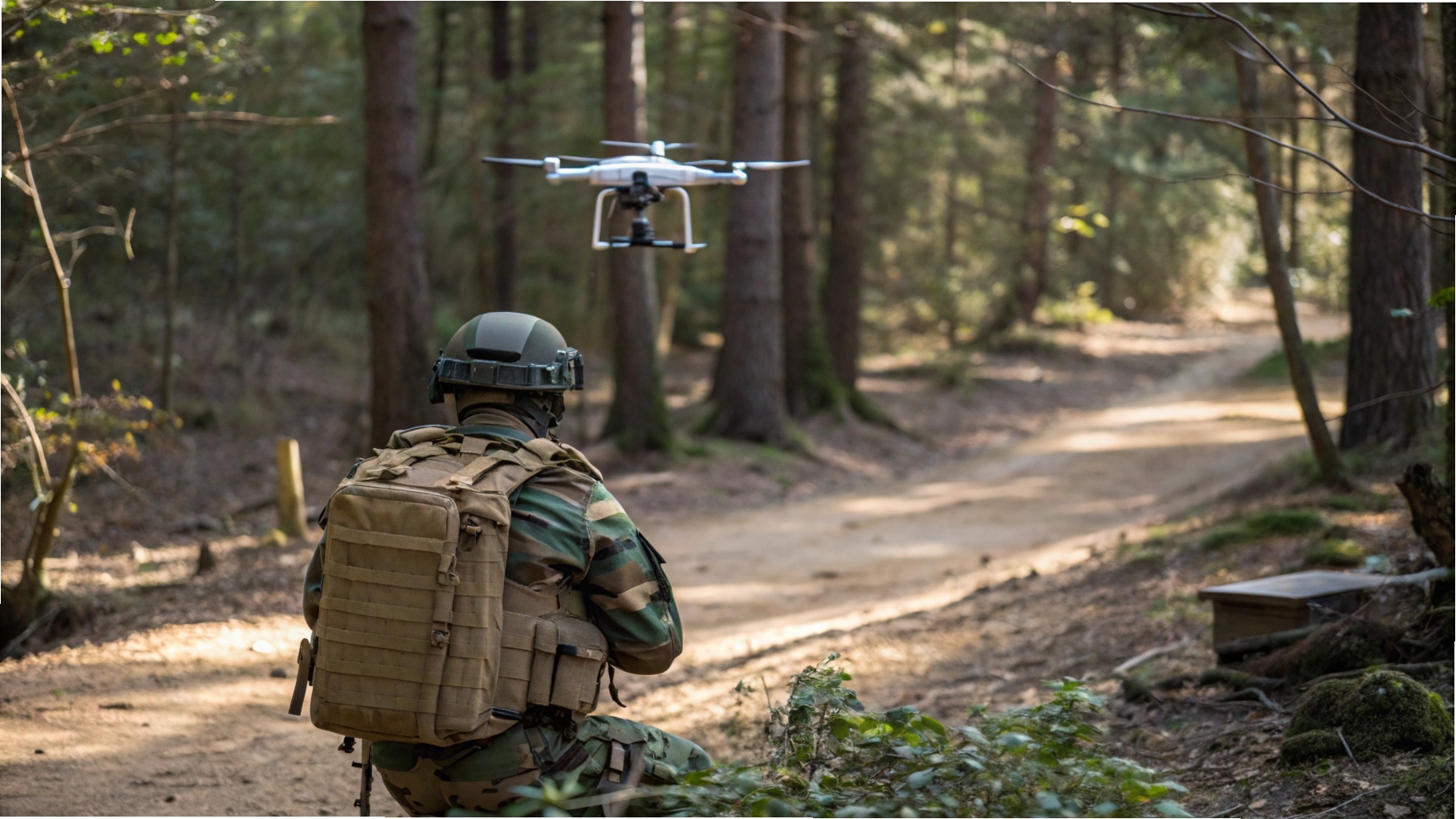
Designed as tactical FPV drones, the Zeus series offers flexible configurations in terms of payload, range, and command-and-control architecture. Operators can choose between radio-based or fiber-optic guidance, depending on mission needs. The 11-inch Zeus in fiber-optic mode has a range defined by the fiber length, carries a 3-kg payload, and cruises at about 54 km/h.
In its radio-guided configuration, the same variant increases payload capacity to 5 kg, achieves ranges beyond 20 km, and reaches top speeds of approximately 101 km/h, supporting longer-distance strike or reconnaissance missions.
The larger 13-inch Zeus is designed to accommodate higher payload weights, with a maximum takeoff weight of roughly 7 kg and an average operating speed of 72 km/h. Payload capacity varies by configuration, carrying around 3 kg in fiber-optic mode and up to 4 kg when radio-controlled.
Completing the lineup is the 2.5-inch Zeus microdrone, intended primarily for close-range ISR missions. The compact system weighs about 225 grams, supports a 300-gram payload, and offers 8–10 minutes of endurance with an effective range of approximately 2 km.