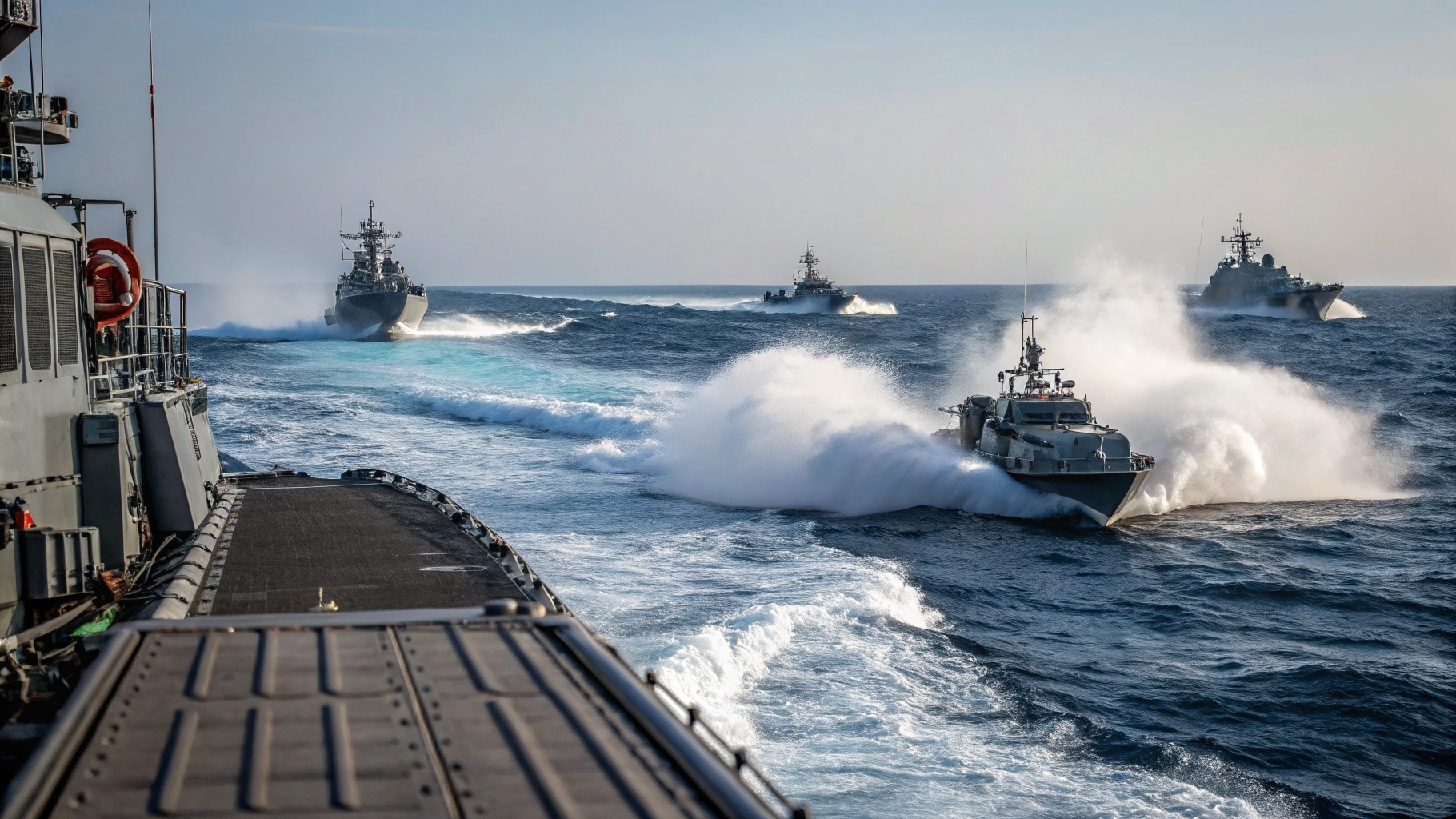
Spain’s Navy has officially inducted its first unmanned surface vessel, marking a key milestone in the fleet’s transition toward integrated manned and unmanned maritime operations.
The Sead 23 USV has been allocated to the CEVENTA unit stationed at the Rota naval base in southern Spain. Designed from the ground up for unmanned operations, the vessel is intended to conduct maritime support and surveillance tasks such as patrolling, escort missions, target detection, coastal reconnaissance, and seabed survey operations.
The 7-meter platform was delivered by Seadrone, a subsidiary of the Zelenza Group, under a €1.1 million ($1.29 million) contract awarded in November 2024.
With a beam of 2.32 meters, a draft of 57 centimeters, and a payload capacity of 600 kilograms, the Sead 23 can carry fuel along with a wide array of mission payloads. Its modular design supports the integration of satellite communications, advanced sensor packages, and additional systems, including remote weapon stations and loitering munitions.
Constructed from fiberglass, the USV is driven by a 320-horsepower diesel engine powering a waterjet, allowing it to reach speeds of up to 36 knots. When operating at an economical speed of 4 knots, the vessel’s endurance can extend to approximately seven days.
By enabling the execution of high-risk tasks without exposing personnel, the Sead 23 significantly enhances operational flexibility and supports manned–unmanned teaming. It plays a role in amphibious operations through rapid landing-zone and bathymetric reconnaissance and supports mine countermeasure missions by deploying sonar systems or underwater vehicles from stand-off ranges.
The platform has already been demonstrated during exercises such as OCEAN 2020, REP(MUS), DÉDALO 23, and BALTOPS 24. Training for operators is currently in progress, with a formal testing campaign planned for 2026.