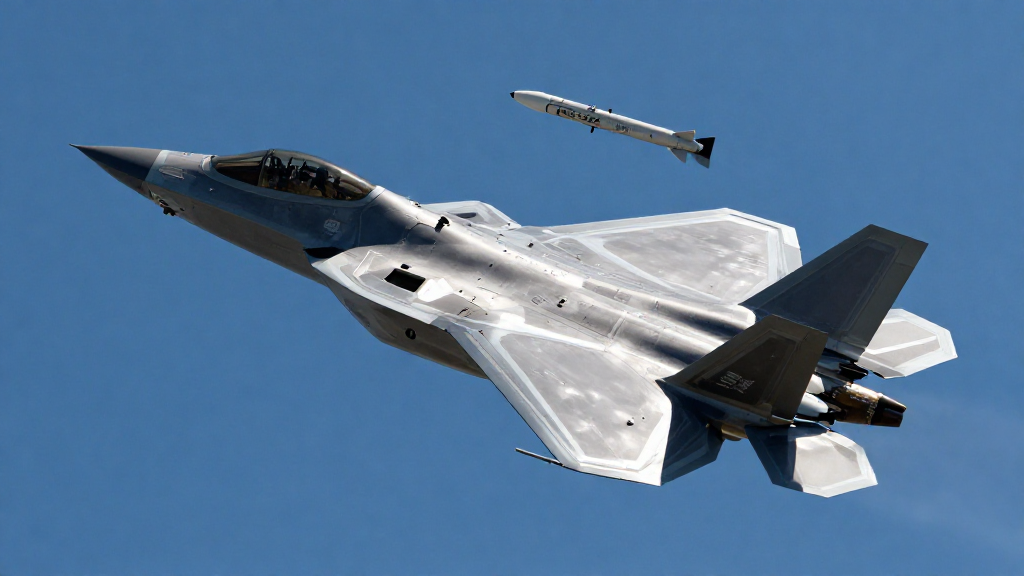

The Indian Air Force (IAF) is pursuing the integration of the Meteor BVRAAM onto the Tejas Mk2 as part of its effort to unify its high-end air combat capabilities. However, this objective is facing significant technical and policy challenges, primarily due to the aircraft’s indigenous systems and integration limitations set by MBDA.
The Tejas Mk2 represents a major evolution in India’s fighter development strategy, emphasizing indigenization and technological independence. Unlike earlier variants that relied on imported radar systems such as the EL/M-2032 and EL/M-2052, the Mk2 is built around the indigenous Uttam AESA radar. Featuring roughly 980 transmit/receive modules, the radar is designed to deliver superior detection range, improved tracking performance, and enhanced multi-target engagement.
This high level of indigenization—exceeding 80 percent—strengthens domestic capability but introduces complexity when integrating foreign weapons like the Meteor missile. MBDA has historically imposed strict integration controls, particularly when non-European radar systems are involved, due to the sensitive nature of its data links and guidance interfaces.
For full operational effectiveness, the Meteor requires deep integration with the aircraft’s fire control system, including access to proprietary source codes. MBDA’s reluctance to share such access for integration with the Uttam radar has created a significant hurdle in the process.
Nevertheless, the IAF continues to explore possible solutions with MBDA. One approach under consideration is a “black box” integration model that protects proprietary software while enabling functional compatibility. Another possibility involves increased industrial collaboration or localized production to facilitate technology transfer. However, no final agreement has been reached, particularly concerning integration timelines for the Tejas Mk2’s initial development phase.
Meanwhile, HAL is moving ahead with plans to integrate the Meteor onto a second batch of 97 Tejas Mk1A aircraft, suggesting that integration pathways exist under certain configurations. This supports the IAF’s goal of deploying the Meteor across multiple platforms, alongside the Rafale fleet where the missile is already operational.
In parallel, India is accelerating its indigenous missile programs to reduce reliance on external systems. The Astra Mk1 is already in service, offering a range of around 110 km, while the Astra Mk2, currently under testing, introduces dual-pulse propulsion to extend its range to approximately 160 km. Future developments, such as the Astra Mk3, are expected to incorporate advanced propulsion technologies like ramjets, potentially matching or surpassing Meteor-class performance and reinforcing India’s strategic autonomy in air combat systems.