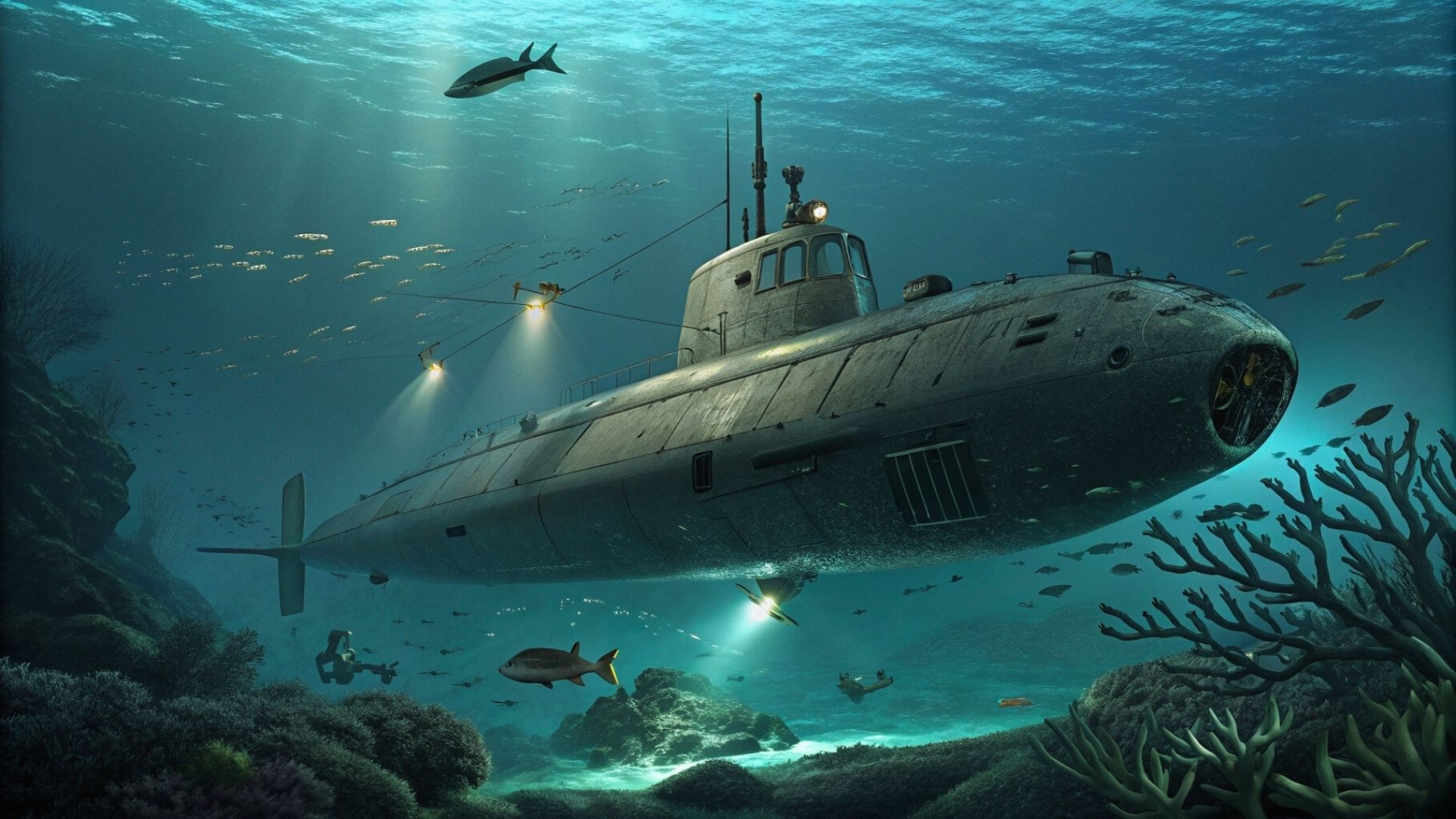
India is considering a significant shift in its submarine strategy by exploring the conversion of its S4-class SSBN into a nuclear-powered guided-missile submarine (SSGN), as well as building new submarines based on the same design. The proposal is seen as a cost-effective way to address capability gaps while the Project-77 SSN program remains years away from completion.
With nuclear-powered attack submarines unlikely to enter service before the mid-2030s, India currently lacks sufficient offensive underwater platforms for escort and anti-submarine roles. Converting the S4 platform into an SSGN offers a faster route to deploy a long-range strike capability.
Instead of carrying nuclear K-4 ballistic missiles, the SSGN variant would be equipped with cruise missiles such as BrahMos-ER, Nirbhay/ITCM, and potentially hypersonic systems. Its existing vertical launch system could be reconfigured to carry multiple cruise missiles per silo, enabling a total payload of 24 to 32 precision-guided weapons.
This would transform the submarine into a conventional strike platform capable of launching coordinated attacks against both maritime and land targets. Operating as a stealthy “long-range sniper,” it could remain submerged for extended periods while holding high-value targets at risk, without escalating to nuclear use.
India’s prior experience with INS Chakra, a Soviet-origin SSGN, supports the concept, while growing naval competition in the Indo-Pacific adds urgency to such capabilities.
From a cost and development perspective, using the S4 platform—already featuring high indigenous content—reduces the need for a new design, focusing instead on weapon system integration. Reports indicate that the Warship Design Bureau is studying whether upcoming S4 submarines could be built directly as SSGNs, similar to the US conversion of Ohio-class submarines.
If realized, the S4-based SSGN would significantly enhance India’s sea-denial capabilities, enabling stealthy, long-range precision strikes and strengthening its overall maritime deterrence posture.