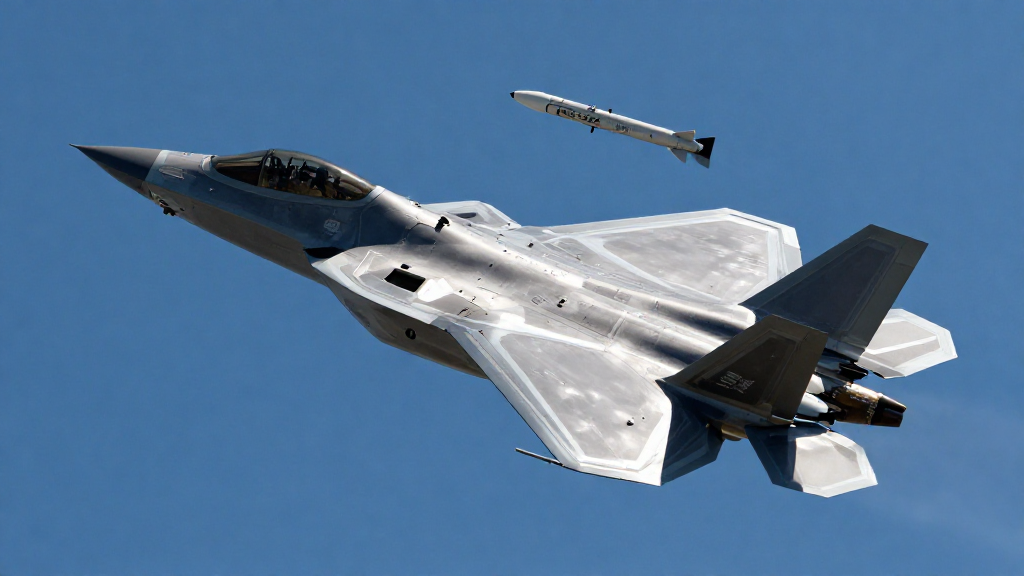

The US Navy is exploring industry options for a new long-range anti-radar missile designed to engage both airborne and ground-based emitters.
Such weapons are intended to locate and disable hostile systems that rely on radio frequency transmissions. The Navy requires the missile to integrate with the F/A-18E/F, EA-18G, and F-35 fleets and to follow open-systems architecture principles, ensuring adaptability for future aircraft platforms.
The program mandates a Technology Readiness Level of at least 7, confirming operational validation of the design. Once a contract is awarded, the Navy expects to introduce the missile into service within two years and produce as many as 300 units per year. Interested firms must provide capability submissions by March 2026.
Current Arsenal
It remains unclear whether the forthcoming system will replace existing weapons. Currently, the US military fields the AGM-88 HARM as its primary anti-radiation missile. Introduced in the 1980s, the weapon continues to serve in modern conflicts, including deployment by Ukraine.
Successive upgrades have enhanced its performance, culminating in the AGM-88G variant with improved range. The missile is 14 feet long, spans 4 feet across its wings, and measures 10 inches in diameter. Equipped with a dual-thrust rocket engine and a 150-pound blast-fragmentation warhead, it can achieve speeds approaching Mach 2.9 and engage targets at ranges of up to 160 nautical miles, depending on configuration.