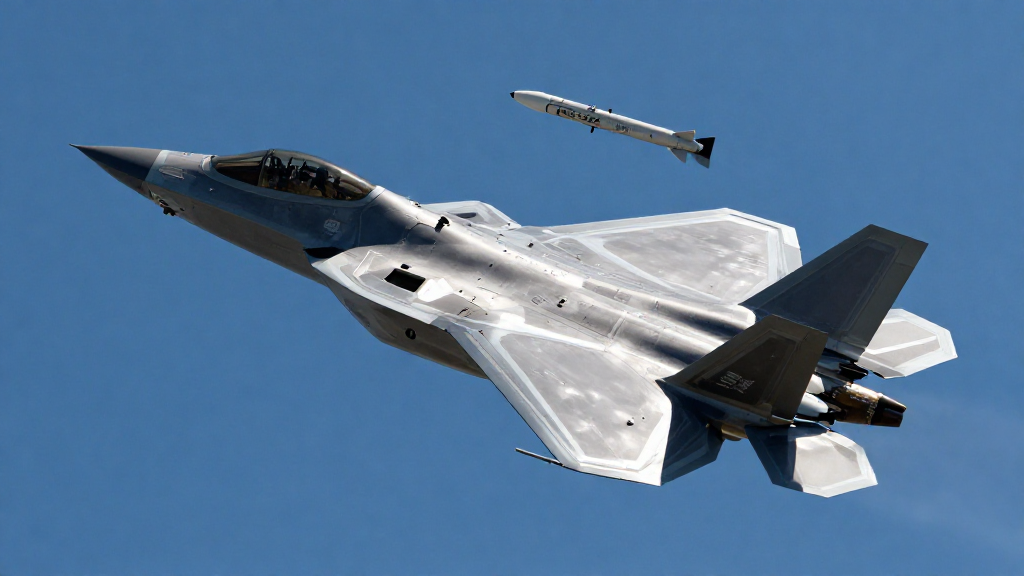

The Defense Innovation Unit has launched a new push to harness commercial sensor innovation in countering ballistic and hypersonic missile threats.
Its latest solicitation invites industry proposals for advanced sensing and seeker technologies capable of supporting interceptor missions against intercontinental ballistic missiles and hypersonic glide vehicles. The requirement centers on systems that deliver high-fidelity detection, tracking, and discrimination while adhering to stringent size, weight, and power limits for both interceptor vehicles and orbital platforms.
The DIU aims to leverage commercial breakthroughs in sensing and data processing. Solutions may incorporate LIDAR or LADAR systems, electro-optical and infrared technologies, radio-frequency sensors, or integrated multi-sensor architectures. The benchmark is the ability to produce fire-control-quality data accurate and responsive enough to guide kinetic interceptors throughout boost, midcourse, and glide phases.
Operational resilience is critical. Systems must function in real time with minimal latency and withstand severe environmental stresses, including radiation exposure and temperature extremes. Modular architectures are preferred, enabling flexible deployment either as seekers on kinetic kill vehicles or as hosted payloads on satellites in low Earth orbit, with an expected mission life of up to five years.
Accelerated Development Path
Under the proposed schedule, selected participants must validate core performance parameters in laboratory testing within six to nine months, followed by space-based demonstrations within 12 to 24 months.
The DIU is also emphasizing affordability and production scalability. Designs should support annual manufacturing rates above 100 units and significantly reduce per-unit costs compared to legacy missile defense sensors.
The program will be executed through the DIU’s Commercial Solutions Opening pathway using prototype Other Transaction agreements. Successful demonstrations could transition directly into production awards without additional competition, expanding deployment across multiple US defense agencies. Participation is open to both domestic and international companies.
Context Within Broader US Efforts
The initiative aligns with ongoing US missile defense modernization efforts. In 2023, the Missile Defense Agency contracted Raytheon to enhance electro-optical and infrared seekers for the Next Generation Interceptor, strengthening midcourse discrimination capabilities.
Concurrently, Northrop Grumman progressed advanced space-based infrared tracking technologies under programs tied to the Space Development Agency’s missile warning constellation.
In 2025, RTX received an $80 million award to advance seeker processor hardware for the Maritime Strike Tomahawk missile, further enhancing targeting accuracy and reliability.
Collectively, these initiatives reflect Washington’s drive to integrate commercial innovation, improve affordability, and accelerate deployment timelines in response to evolving hypersonic threats.