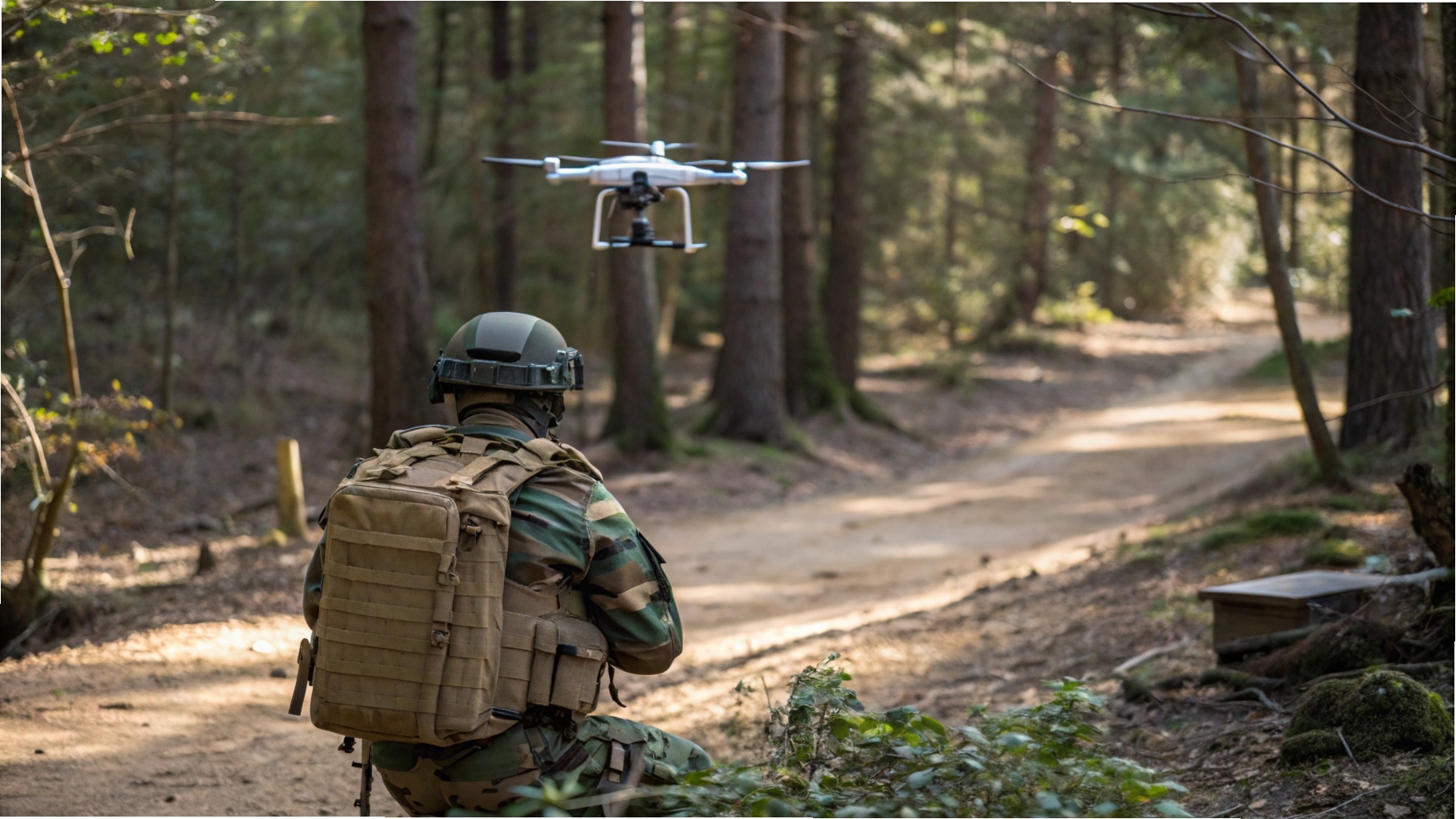

At Truppenübungsplatz Putlos in northern Germany, U.S. Army air defense units and technology teams gathered for an in-depth evaluation of emerging counter-drone systems. This multiweek field event carries strategic weight, helping the Army stay ahead of rapidly expanding unmanned aerial threats aimed at NATO forces.
Throughout November 2025, soldiers from the 52nd Air Defense Artillery Brigade and the 10th Army Air and Missile Defense Command conducted a rigorous series of live tests at the Baltic Sea training grounds. Participants noted that the event united air defense crews with acquisition specialists and industry developers, allowing them to push new counter-UAS prototypes through demanding, real-world scenarios and assess how cutting-edge sensors and interceptors respond under operational stress.
The Putlos range, situated in the Ostholstein district and facing the Baltic’s open coastline, became a focal point for the Army’s modern counter-UAS concept. Its expansive airspace and varied terrain provided the ideal backdrop for drone flight paths, radar testing, and layered defense exercises. Under Project FlyTrap 4.5—a classified technology assessment—the Army brought together tactical operators, program managers, and select commercial innovators for a high-stakes NATO-aligned demonstration of future drone-defeat capabilities.
What made FlyTrap 4.5 especially notable was the seamless link of experimental systems into a functioning command-and-control network. Every participating platform had to integrate with the brigade’s forward air defense C2 system, a critical component of NATO’s Eastern Flank defense structure. Support from U.S. Army Europe’s V Corps and maneuver units from the 2nd Cavalry Regiment helped prove that these emerging technologies are ready for immediate tactical deployment within layered multinational defense operations.