
The U.S. Marine Corps has fielded its new ACV-P (Amphibious Combat Vehicle–Personnel Carrier) during ship-to-shore operations from USS Makin Island off the California coast, marking another milestone in the modernization of U.S. amphibious warfare capabilities.
Marines from the 3rd Assault Amphibious Battalion, 1st Marine Division, conducted the operations aboard the Wasp-class amphibious assault ship USS Makin Island (LHD-8) during Quarterly Underway Amphibious Readiness Training 26.2. The January 23, 2026, exercise highlighted the Navy–Marine Corps team’s ability to project upgraded ground combat power from the maritime domain.
The training event was part of routine amphibious exercises intended to preserve combat readiness and validate the integration of new armored platforms with U.S. Navy amphibious ships. Such at-sea operations ensure Marines and Sailors remain adept at the complex coordination required for modern amphibious assaults.
Quarterly Underway Amphibious Readiness Training continues to play a central role in maintaining Navy–Marine Corps interoperability by reinforcing command structures, communications, and tactical procedures necessary for maritime force projection.
The Amphibious Combat Vehicle is the Marine Corps’ next-generation armored amphibious platform, designed to replace the aging AAV-7A1, which entered service in the early 1970s and faced increasing survivability and protection challenges in modern combat environments.
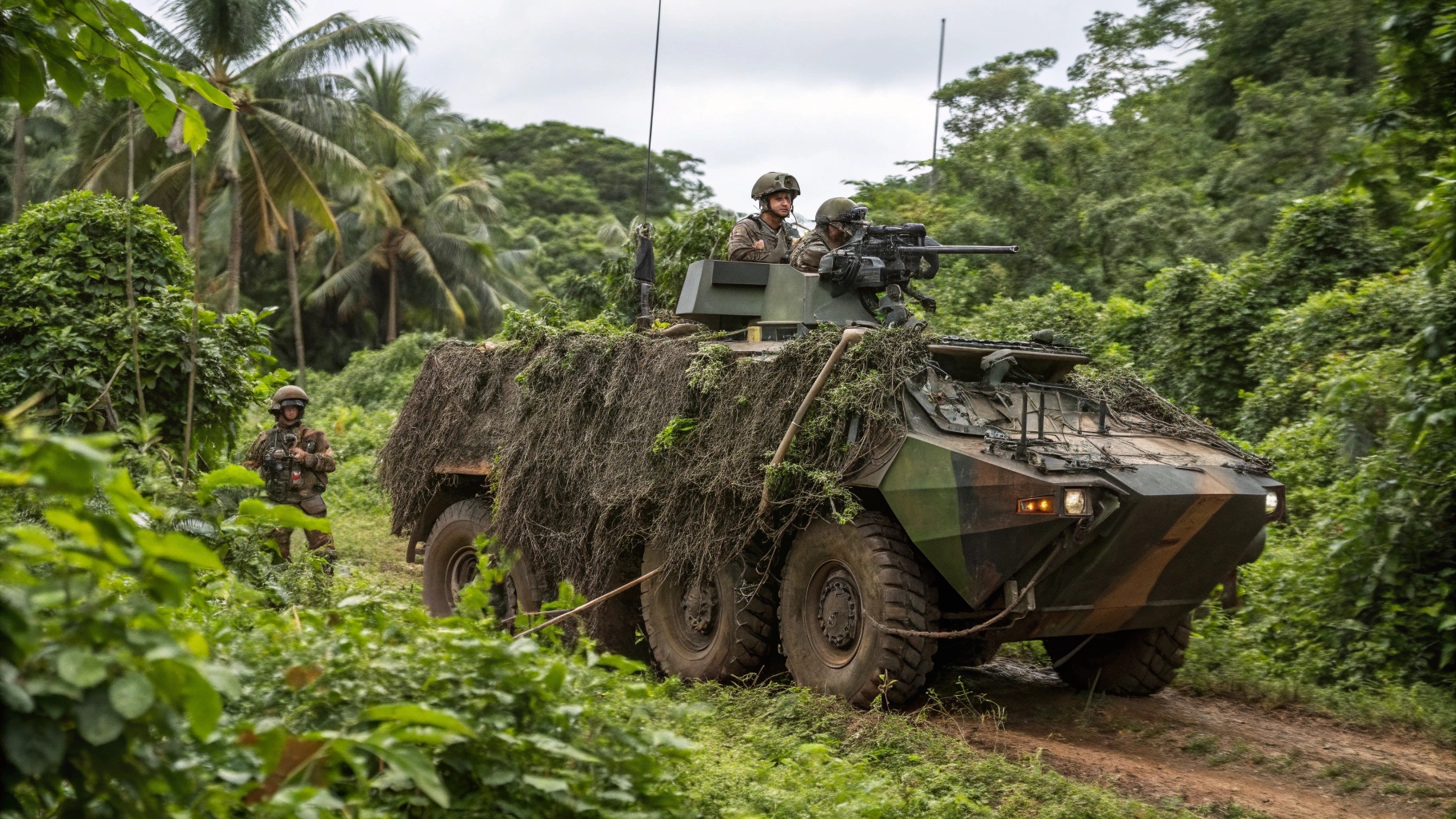
Based on a modern 8×8 wheeled armored vehicle design, the ACV offers improved land mobility, reduced maintenance demands, and enhanced speed, range, and maneuverability at sea. The platform is engineered to self-deploy from amphibious ships, operate in open-ocean conditions, and transition efficiently to sustained ground operations once ashore.