
Boeing has announced that the U.S. Navy’s first operational MQ-25A Stingray has completed its inaugural autonomous taxi test, marking a key early milestone in the Navy’s effort to integrate uncrewed aircraft into everyday carrier flight deck operations.
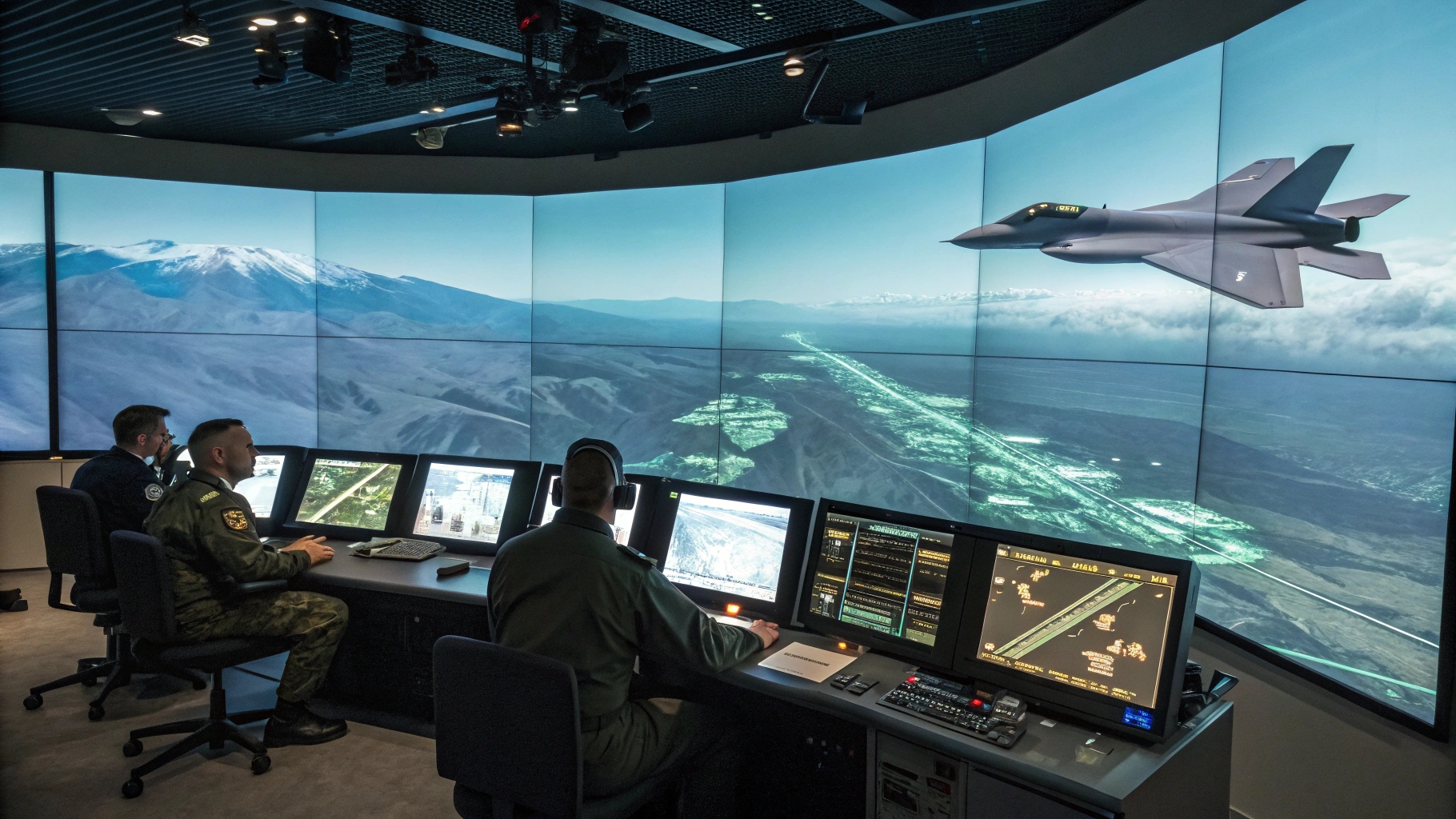
During the test, the MQ-25A performed a series of autonomous ground manoeuvres in response to commands from Air Vehicle Pilots. Although conducted at a land-based facility, Navy officials see the event as a critical stepping stone toward carrier deployment, where the movement of aircraft on tightly packed flight decks is considered one of the most challenging and hazardous phases of naval aviation.
Significantly, the aircraft involved was configured to full operational standards rather than as an experimental demonstrator. Upon receiving a single command, the Stingray taxied along designated routes, executed controlled turns, and carried out stop-and-hold actions intended to mirror carrier deck handling procedures. According to Boeing, the aircraft’s autonomy software successfully fused navigation data, control logic, and built-in safety constraints, ensuring stable and predictable responses in a dynamic environment. For the Navy, this level of confidence is essential given the unforgiving nature of carrier deck operations.
The MQ-25A programme emerged from a strategic reassessment of carrier aviation driven by evolving threat environments and lessons from recent conflicts. By the mid-2010s, the Navy concluded that the combat radius of carrier-based fighters was increasingly challenged by longer-range adversary systems. Rather than immediately pursuing a new manned aircraft, the service prioritised the development of an organic aerial refuelling capability. In August 2018, Boeing was awarded the Engineering and Manufacturing Development contract for MQ-25, worth approximately USD 805 million, defeating bids from General Atomics and Lockheed Martin. The contract covered four development aircraft, ground control infrastructure, and support equipment, with later contract actions expanding the programme into production.
From an operational standpoint, the MQ-25A Stingray is designed to serve as a central enabler within the carrier strike group. Its primary role as an aerial refueller is expected to eliminate the long-standing reliance on F/A-18E/F Super Hornets for buddy-tanking, thereby restoring valuable fighter flight hours to combat roles. Powered by a Rolls-Royce AE 3007N turbofan, the MQ-25A is optimised for long endurance and efficient fuel delivery, with a projected offload capacity exceeding 6,800 kg (15,000 lb) at tactically relevant ranges, significantly extending the reach of F-35C and Super Hornet operations.
Looking ahead, the U.S. Navy views the MQ-25A as more than a single-mission tanker. Internally, it is seen as the gateway to a broader uncrewed aviation framework aboard aircraft carriers. Its autonomy, communications, and deck integration concepts are deliberately structured to support future mission growth. Once carrier operations are routine, the platform could assume secondary roles such as persistent ISR, airborne communications relay to extend command-and-control over distributed forces, and battlespace sensing to support long-range targeting—allowing manned aircraft to focus on high-end combat tasks while unmanned systems provide endurance and situational awareness.