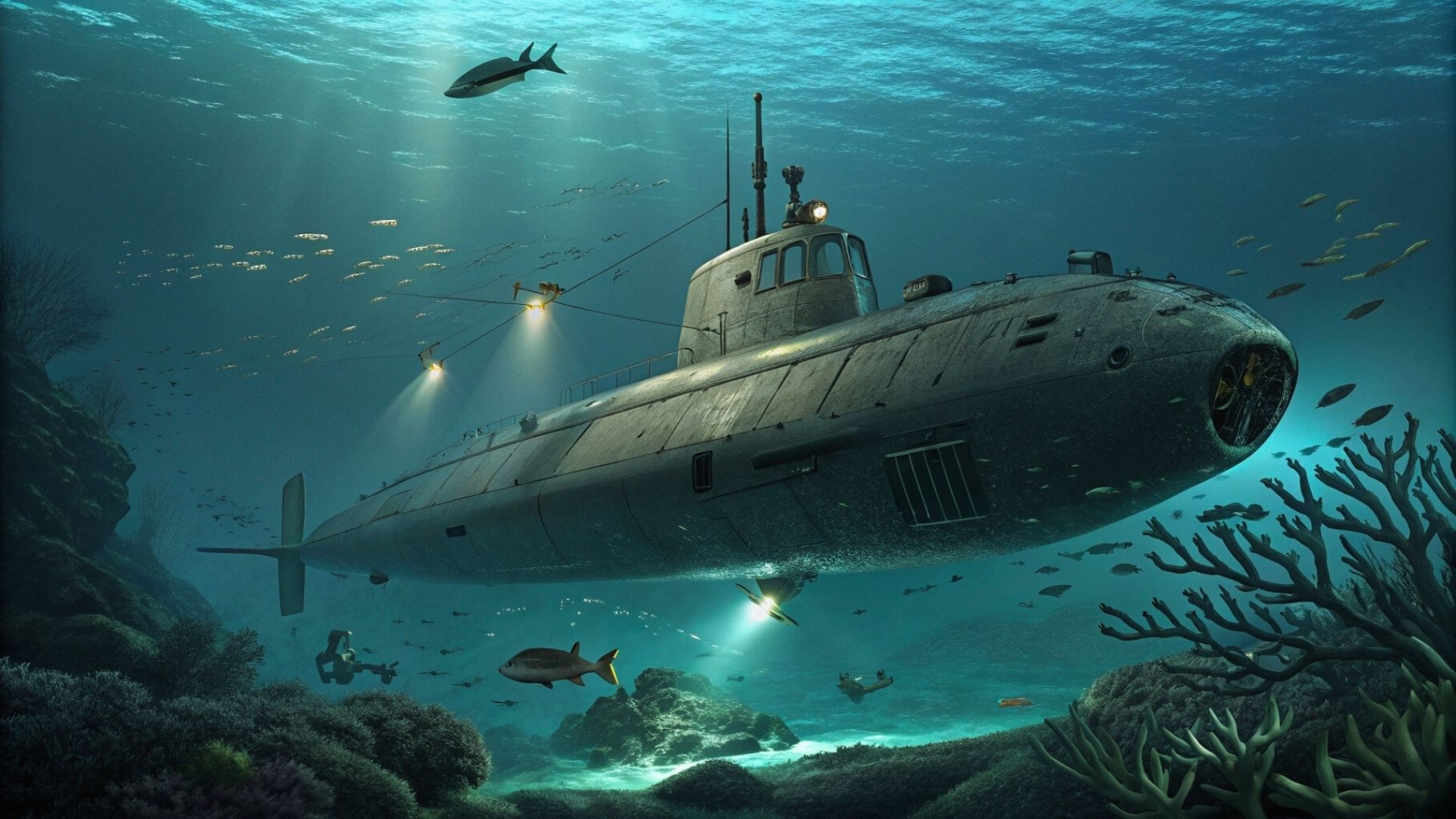
Far below the ocean’s surface, America’s future nuclear deterrent is quietly coming together. The Columbia-class submarine is a next-generation ballistic missile platform designed to replace the Ohio-class fleet and preserve the US nuclear triad through the middle of the 21st century.
Built for silence, resilience, and long-duration patrols, the submarine integrates state-of-the-art propulsion, sonar, and missile systems, allowing it to remain hidden for extended deployments. Its mission is simple but decisive: survive, remain undetected, and ensure a credible retaliatory strike if required.
Role in the US Navy
The US Navy operates three submarine types: attack submarines (SSNs), cruise missile submarines (SSGNs), and ballistic missile submarines (SSBNs). Unlike their multi-role counterparts, SSBNs are dedicated solely to strategic nuclear deterrence.
The Columbia-class program, identified as the Navy’s top acquisition priority, will deliver 12 SSBNs to replace the Ohio-class submarines as they reach the end of their service lives in the 2030s.
Cost, Schedule, and Risk
As one of the largest naval acquisition programs ever undertaken, the Columbia-class carries a projected procurement cost of $126.4 billion and a total acquisition cost of $139.7 billion.
Construction of the first boat, USS Columbia (SSBN-826), began in 2021, with delivery expected in the early 2030s. Additional submarines will be produced at roughly two-year intervals to maintain continuous at-sea deterrence throughout the transition from the Ohio-class fleet.
The program faces ongoing challenges, including the integration of complex stealth technologies, demanding manufacturing processes, and the need to control costs amid broader defense budget pressures.
How the Columbia-Class Operates
The Columbia-class is designed around stealth and survivability rather than speed. Its hull form, acoustic treatments, isolated machinery, and advanced propulsors minimize noise and vibration, reducing detectability by modern sensors.
An electric-drive propulsion system further lowers acoustic output while simplifying mechanical systems. A major advancement is the life-of-ship nuclear reactor, which removes the need for mid-life refueling and enhances readiness across a planned 42-year operational lifespan.
The submarine employs secure, low-probability-of-intercept communications, including extremely low-frequency transmissions, ensuring it can receive authenticated commands while submerged—even in contested environments.
For deterrence missions, the Columbia-class carries Trident II D5 ballistic missiles. The launch architecture is optimized for reliability and survivability, underscoring the platform’s role as a second-strike deterrent rather than an offensive first-use system.
Strategic Impact
The Columbia-class is expected to shape US undersea strategic capability for decades to come. Its blend of advanced stealth, propulsion, and modular construction sets a new benchmark for SSBN design, while its continuous at-sea presence remains a cornerstone of US nuclear strategy—sending a clear signal that deterrence will be maintained under any conditions.