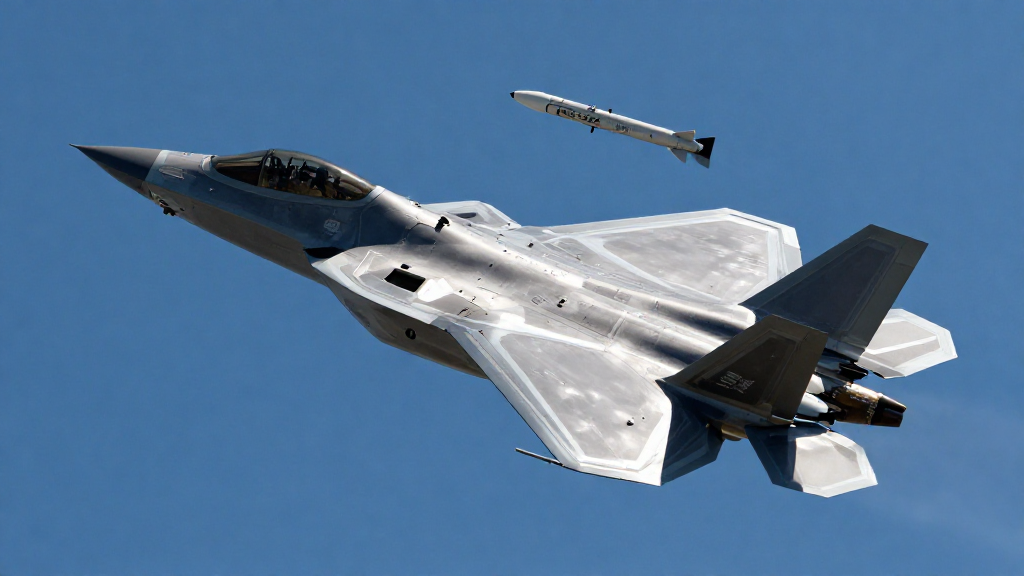

Stavatti Aerospace has presented a competing vision for the US Navy’s Next Carrier Air Dominance initiative, introducing a high-performance aircraft concept designed to succeed the F/A-18E/F Super Hornet in the next decade.
Known as the SM-39 Razor, the design employs a stealth-optimized triple-fuselage layout intended to minimize wave drag during prolonged supersonic operations. The company states that the aircraft could reach Mach 4, while maintaining supercruise speeds above Mach 2.5.
Stavatti says the SM-39 would be compatible with future directed-energy weapons, including technologies currently being developed by Northrop Grumman. The platform is planned in manned and unmanned configurations, including single-seat, dual-seat, and fully autonomous variants, all enabled by a modular cockpit design.
Key avionics are housed in the central fuselage, which contains a Raytheon AESA radar, the forward landing gear, and two internal weapons bays. Power is provided by a twin-engine propulsion system combining General Electric technology with Stavatti’s NeoThrust E1400 engine family.
The announcement follows reports earlier this month detailing initial NCAD program assumptions, which project a fleet of at least 600 aircraft at an estimated unit cost of $85 million, for a total program value of around $51 billion.
Aircraft deliveries are projected between 2031 and 2037, supported by 50 mission simulators. Stavatti has also outlined plans for a new US manufacturing facility capable of producing up to 200 aircraft annually and supporting approximately 1,600 skilled jobs over a 20-year period.